Worm Gearbox for Bottling & Filling Machines — Hygienic Precision Drive for High-Speed Liquid Lines
Food Processing Industry | Filling & Capping | Worm Gear Drive Application Guide
Modern bottling and filling lines operate at breathtaking speed — 200, 500, even 1 200 containers per minute — while demanding millimetre-accurate positioning of each vessel under the fill nozzle. Every rotation of the conveyor belt, every index of the star-wheel, every cap-torque cycle is controlled by a precisely selected drive unit. The worm gear reducer is uniquely positioned to serve these lines: its hollow-bore output shaft eliminates exposed shaft-to-coupling joints where product residue could accumulate, while its quiet, smooth transmission keeps the filling environment free from disruptive vibration. This page explains exactly how to specify a worm gearbox for bottling, capping, and filling machine applications.
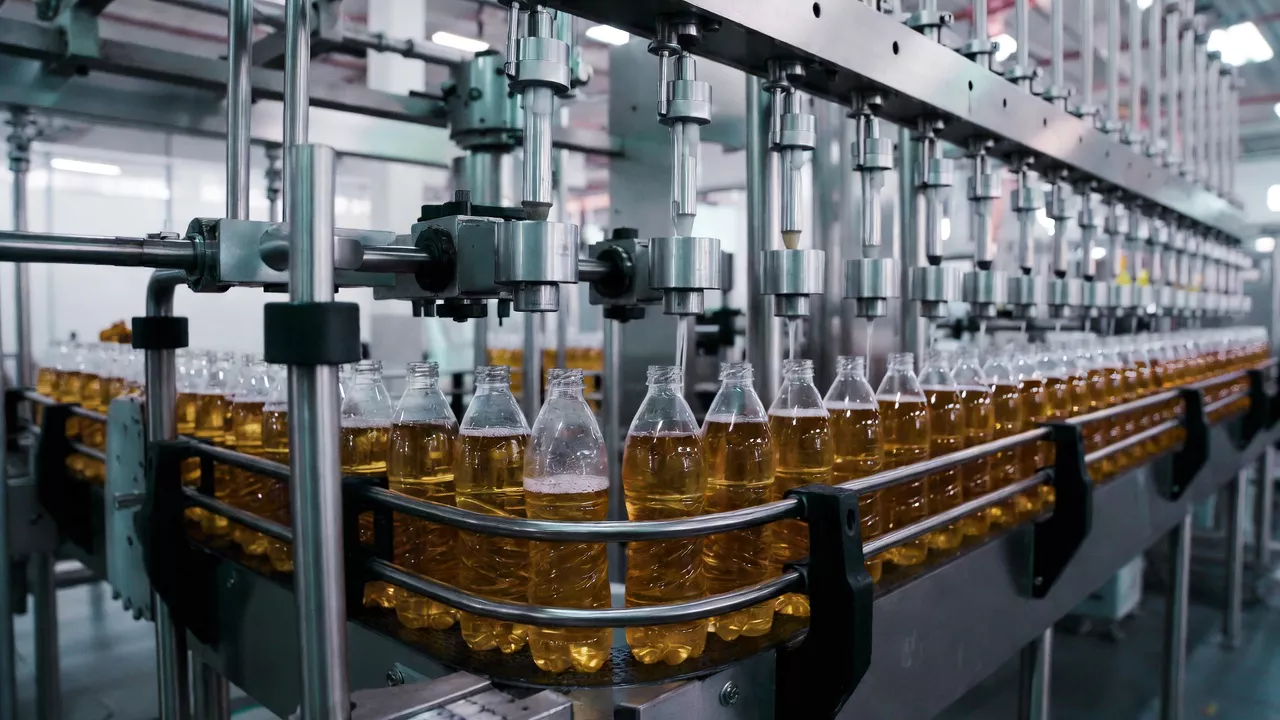
Bottling & Filling Machinery — Where Worm Drives Fit
A liquid filling line consists of multiple stations, each with its own drive requirement:
Multi-lane flat-belt conveyors feeding bottles to the filling carousel. Worm reducer provides quiet, low-speed belt drive with self-locking in the event of a downstream jam.
Multi-position indexing of the filling carousel requires precise low-speed rotation. Hollow-bore worm reducer eliminates coupling offset errors and simplifies the star-wheel shaft interface.
Screw-cap torque must be tightly controlled. Worm drives with servo or stepper motor compatibility provide repeatable cap-torque without expensive servo reducers.
Label roll tension and wrap-around drum speed. Low-backlash worm reducer ensures consistent label pitch registration at 300+ bpm line speeds.
The worm wheel is manufactured from tin bronze (ZCuSn10Pb1) and the housing from die-cast aluminium (ADC12) or, for aggressive CIP (Clean-in-Place) zones, 316L stainless steel. The key material advantage is that aluminium and stainless housings are non-reactive to acidic cleaning agents (citric acid, peracetic acid) used in food plant sanitation cycles.
The hollow-bore (hollow shaft) output configuration eliminates the classic problem: in a solid-shaft reducer mounted behind a star-wheel, there is a gap between the reducer face and the star-wheel bearing housing where liquid, foam, and sugar syrup collect. In a hollow-bore design, the reducer slides directly over the star-wheel shaft — zero gap, zero accumulation zone. This design choice is aligned with EHEDG (European Hygienic Engineering & Design Group) and 3-A Sanitary Standards principles for food zone equipment.
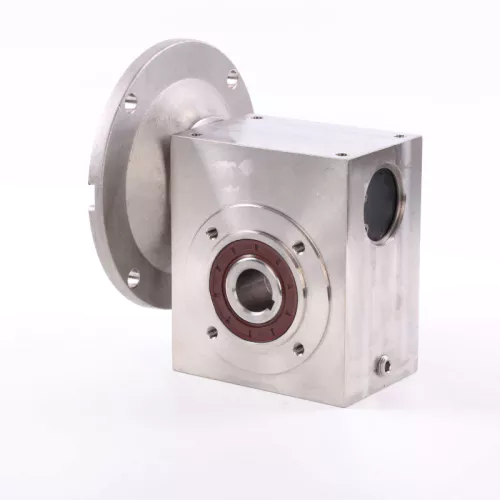
Technical Specifications — Bottling & Filling Machine Worm Reducers
| Parameter | Available Options | Bottling Line Preference |
|---|---|---|
| Gear Ratio | 5:1 – 100:1 | 10:1 – 40:1 (conveyor); 20:1 – 50:1 (star-wheel) |
| Output Torque | 10 – 4 500 N·m | 20 – 300 N·m (light to medium filling machines) |
| Output Shaft Type | Solid / Hollow bore / Flange | Hollow bore preferred for hygienic star-wheel mounting |
| Housing Material | Aluminium / Cast iron / SS 316L | Aluminium (splash zone); SS 316L (full washdown) |
| Lubricant | Mineral ISO VG 220 / Synthetic PAO / H1 Food-Grade | H1 food-grade for incidental contact zones |
| IP Rating | IP65 / IP66 | IP66 — high-pressure washdown in food plant |
| Seal Material | NBR / FKM / EPDM | EPDM for hot-water / steam CIP; FKM for acidic CIP |
| IEC Motor Flange | B5 / B14 | B14 for servo/stepper motor compact coupling |
Matching Worm Reducer Ratio to Filling Carousel Speed
A 24-head rotary filler at 200 bottles per minute requires the carousel to rotate at 200/24 = 8.33 rpm. With a standard 4-pole IEC motor at 1 450 rpm, the required ratio = 1 450 / 8.33 = 174:1. For such high ratios, a double-stage worm reducer (two worm stages in series) achieves ratios to 3 600:1 in a compact package. Alternatively, a ratio of 50:1 worm reducer combined with a VFD-adjusted motor speed gives full speed flexibility across product changeovers — the preferred setup for modern flexible filling lines. Contact our technical team for carousel speed calculations.
Compliance & Hygienic Standards
- ISO 9001:2015 — certified quality management system for all manufactured units
- CE Marking — compliance with EU Machinery Directive for food machinery
- H1 Lubricant Certification — NSF H1 registered food-grade gear oil available on request
- Motor flange dimensions to IEC 72-1 — B5 and B14 flanges available for direct motor coupling
- IP66 sealed to IEC 60529 — rated for sustained high-pressure water jets used in CIP cycles
- 316L stainless steel housing option — corrosion resistance confirmed per ASTM A240 / EN 10088-2
Case Studies — Five Bottling & Filling Applications
Mineral Water Filling — 500 ml PET Bottle Line, Italy
Challenge: Existing helical reducer’s exposed coupling collected water and algae, failing hygiene audits. Solution: Hollow-bore worm reducer (IP66, H1 oil, aluminium housing) slid directly over star-wheel shaft — zero coupling gap. Result: Passed BRC Global Standard audit; reducer serviced annually vs. quarterly before.
Beer Canning — High-Speed Can Seamer, Germany
Challenge: Seamer chuck drive needed backlash below 0.3° for consistent double-seam quality; standard worm drives showed 0.8° backlash. Solution: Anti-backlash worm reducer with preloaded thrust bearing, ratio 20:1. Result: Seam width variation ±0.05 mm; can rejection rate fell from 0.4 % to 0.06 %.
Personal Care Products — Shampoo Filling, China
Challenge: High-viscosity shampoo required slow, consistent fill speed; VFD speed range 5–50 Hz. Solution: VFD-rated worm reducer, ratio 30:1, synthetic PAO lubricant for low-speed thermal stability. Result: Fill accuracy ±1 g across full speed range; no thermal shutdown events over 14-month evaluation.
Pharmaceutical Liquid — Vial Filling, Switzerland
Challenge: GMP cleanroom required full material traceability of every drive component. Solution: SS 316L housing worm reducer with EN 10204 3.1 material certificates for all metallic parts. Result: Passed FDA 21 CFR Part 211 GMP audit without observations; 3-year maintenance-free operation.
Juice Line — Hot-Fill PET Bottling, Thailand
Challenge: Hot-fill product at 87 °C elevated ambient temperature to 55 °C around conveyor drives; mineral oil degraded rapidly. Solution: PAO synthetic lubricant (rated to 100 °C), up-rated thermal capacity check performed. Result: Oil change interval extended from 6 months to 24 months; gearbox surface temperature 12 °C lower than previous model.
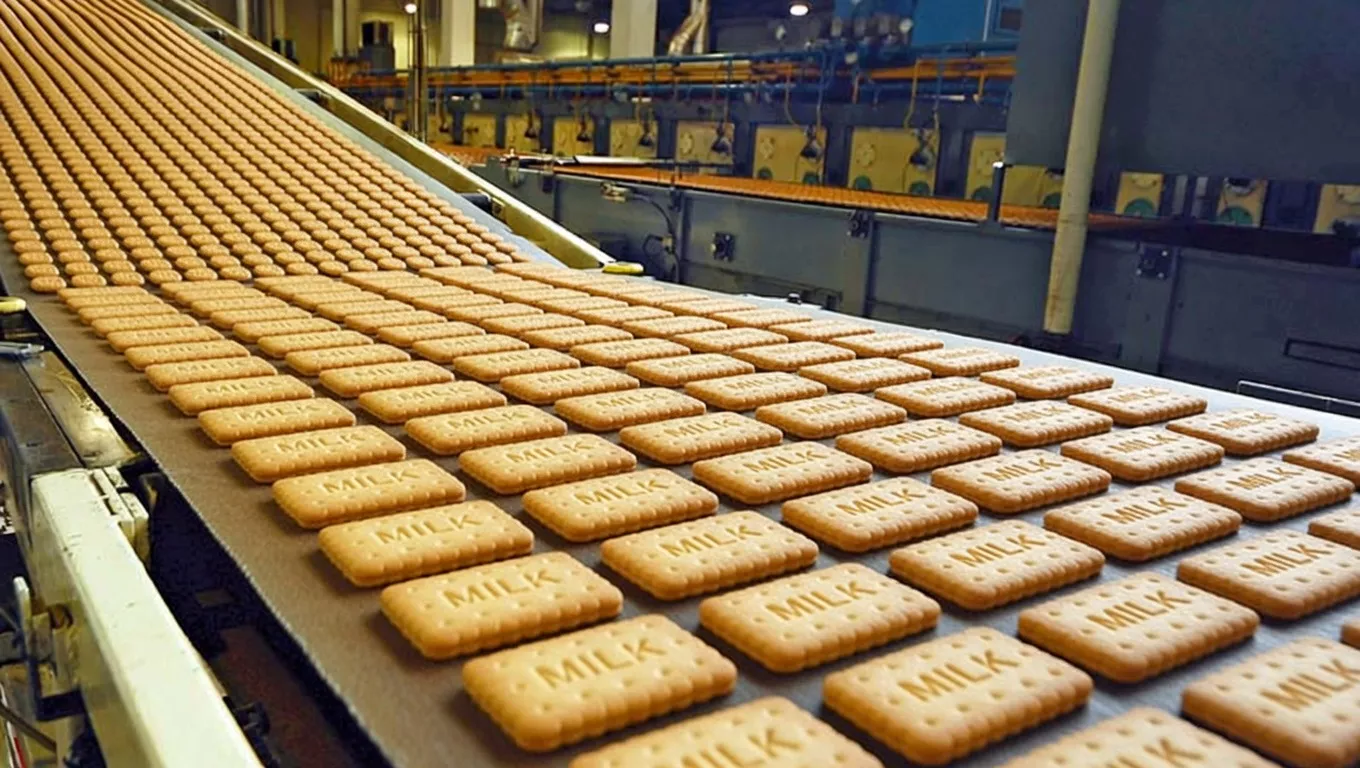
Why Bottling Machine OEMs Choose Our Worm Drives
Frequently Asked Questions
What lubricant should I use in a bottling plant where food contact is possible?
Specify NSF H1 registered food-grade lubricant (e.g., ISO VG 220 H1 PAO synthetic). H1 lubricants are approved for incidental food contact and are accepted by FDA, USDA, and EU food regulations. We supply all reducers for food zone applications pre-filled with H1 oil; the fill quantity and type are marked on the nameplate for traceability.
How does hollow-bore output shaft improve hygiene compared to solid shaft?
A solid-shaft reducer requires a coupling between its output shaft and the machine shaft — creating a gap, bolted joints, and crevices where liquid and microorganisms accumulate. A hollow-bore reducer slides directly over the machine shaft, sealed at one end by the reducer housing face and locked by a clamping collar. There is no external coupling, no crevice, and no exposed shaft-to-shaft joint. This is the design principle of EHEDG and 3-A hygienic equipment guidelines.
Can your worm reducer withstand CIP cleaning with hot caustic solution?
Yes, with appropriate options. For hot caustic (NaOH 2–5 %, 70–85 °C) or acidic (peracetic acid, citric acid) CIP cycles, specify: IP66 sealing, EPDM or FKM seals (depending on chemical type), and aluminium or SS 316L housing. Avoid standard NBR seals for alkaline CIP — they will swell and fail. We provide a seal compatibility table on request.
What backlash can I expect, and is low-backlash version available?
Standard worm reducers have 0.5–1.5° of angular backlash at the output shaft — acceptable for most conveyor and carousel applications. For capping torque control and precise label registration, we offer low-backlash variants (<0.3°) with preloaded thrust bearings and tighter worm gear mesh clearance. These are assembled and tested individually and carry a slight price premium over standard.
Do you supply motor-gearbox combos ready for installation on filling machines?
Yes. We offer pre-assembled motor-reducer units (gearmotors) with IEC motors ranging from 0.09 kW to 22 kW. The motor and reducer are aligned, coupled, and tested as a unit before shipment. For OEM filling machine builders, we can supply kitted assemblies with custom cable exit directions, terminal box positions, and nameplate markings to match your machine documentation.
Optimise Your Bottling Line Drive — Get Expert Selection
Share your filling machine specifications — carousel diameter, bottle output rate, CIP method — and we provide a tailored worm reducer recommendation with hygienic design documentation.
Explore the complete worm gearbox product range for more application configurations.