Corrosion-Resistant Worm Gear Reducers for Wastewater Polymer Blending Systems
Wastewater treatment facilities operate some of the most corrosive, continuously-running drive environments in existence. Polymer blenders — responsible for mixing flocculants, coagulants, and polyelectrolytes directly above open treatment tanks — require a worm reducer that can handle long-duty cycles, survive acidic vapors and perpetual humidity, and deliver the consistent low-speed torque needed to keep chemical dosing uniform.
Our worm gearbox range for water and wastewater applications features high-strength anti-corrosion coatings as standard, IP65/IP66 sealing, and is designed for S1 continuous duty — making them the drive of choice at municipal water treatment plants, industrial effluent facilities, and desalination pre-treatment systems worldwide. Visit our products page to explore all available specifications.
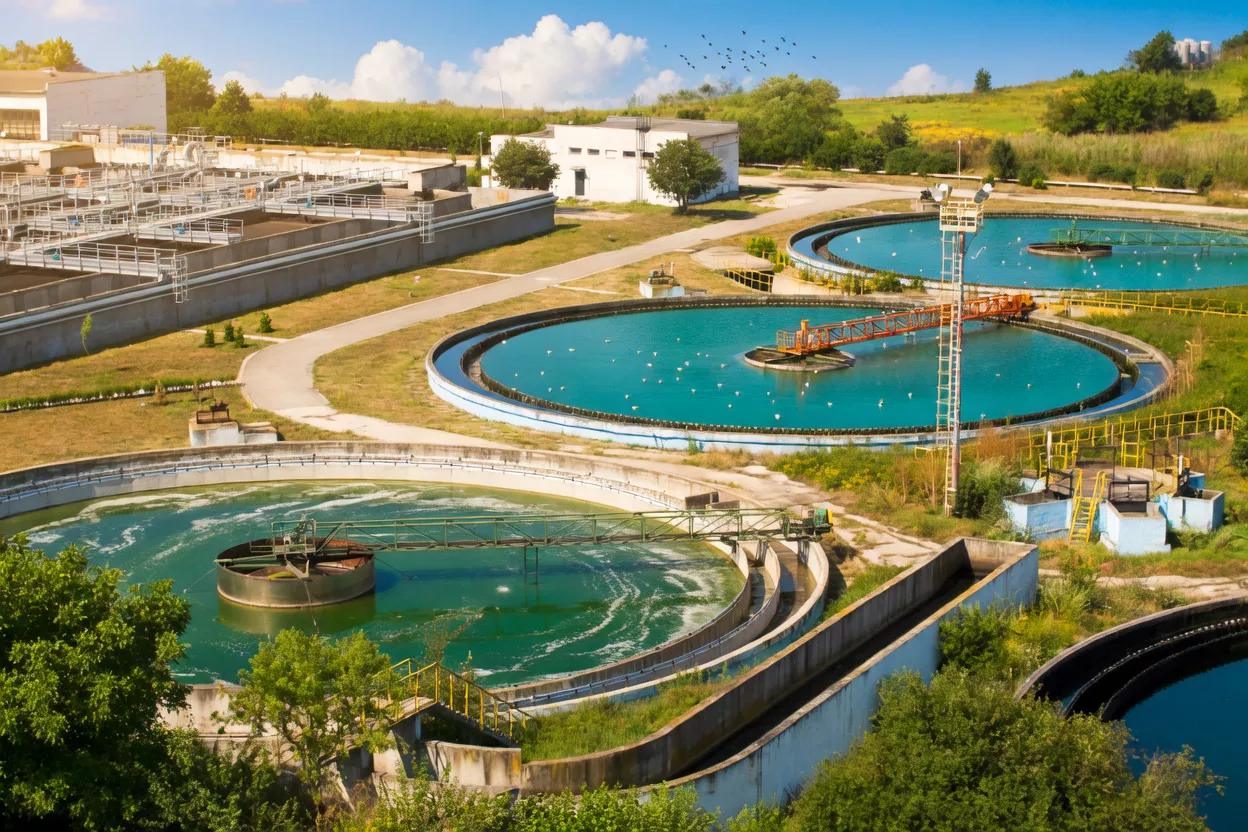
Wastewater Treatment: Drive Challenges and Worm Gear Solutions
Polymer blending in water treatment is not a simple mixing task. The process requires controlled, repeatable blending of highly concentrated polymer solutions — often aggressive chemicals that off-gas corrosive vapors. The worm gear unit must operate reliably under the following conditions:
- 24/7 continuous operation — wastewater plants never stop; drives must operate without scheduled downtime
- High humidity and corrosive vapor exposure — flocculant chemicals release reactive vapors that attack standard paint coatings
- Outdoor and semi-outdoor installation — exposed to rain, temperature swings, and UV radiation
- Variable load from polymer viscosity changes — polymer concentration changes with ambient temperature, creating fluctuating torque demand
- Low-speed output requirement — polymer blending is most effective at 15–50 RPM to prevent shear degradation of long-chain polymer molecules
Material Science: Corrosion-Resistant Construction
Our wastewater-grade worm drive reducer units incorporate the following material and coating specifications designed specifically for chemical treatment environments:
Housing
Grey cast iron or aluminum alloy; epoxy polyester powder coat; optional marine-grade paint system
Worm Shaft
20CrMnTi alloy steel, case-hardened HRC 58–62; optional 304 SS for extreme corrosion environments
Worm Wheel
Centrifugally-cast phosphor-bronze ZCuSn10Pb1 for low-friction, corrosion-resistant wear surface
Seals
NBR double-lip shaft seals standard; VITON seals available for chemically aggressive vapor environments
Technical Specifications — Wastewater Polymer Blender Worm Reducers
| Specification | Standard Range | Wastewater Application |
|---|---|---|
| Gear Ratio | 7.5:1 – 100:1 | 20:1 – 40:1 for 15–50 RPM blending |
| Output Torque | Up to 4,500 N·m | SF 1.5 minimum; 2.0 for 24/7 duty |
| Input Shaft | Ø11 – Ø55 mm | IEC B5/B14 flange for standard motor coupling |
| Housing | Aluminum / Cast iron | Cast iron + epoxy coating for outdoor/chemical zones |
| Ingress Protection | IP65 / IP66 | IP66 essential — outdoor tanks and rain exposure |
| Ambient Temperature | -10°C to +40°C | VG220 oil for ≤40°C; VG320 for hot climates |
| Mounting | Foot / Flange | Flange-mount for tank-top blender head attachment |
Quality Certifications & Environmental Standards
ISO 9001:2015 — Documented quality management across all manufacturing stages
CE Certification — Compliant with EU Machinery Directive and Low Voltage Directive
IEC 72-1 — Motor flange interface standard for universal motor compatibility
IP65 / IP66 — Tested per IEC 60529 for dust-tight and water-jet resistant sealing
RoHS-compliant materials — no restricted hazardous substances in manufacturing
Case Studies — Wastewater & Water Treatment Installations
Municipal WWTP — Netherlands
Pain: Polymer blender drives were corroding and failing every 8 months due to flocculant vapor exposure. Solution: Supplied WPA series with marine epoxy coating and VITON shaft seals. Result: Service life extended to 3+ years — zero corrosion-related failures.
Industrial Effluent Plant — South Korea
Pain: Blender ran 24 hours/day; standard gearboxes overheated after 6 hours. Solution: Next-size-up WPA unit with synthetic oil and IP66 housing. Result: Stable operating temperature after 12-hour continuous run; no thermal shutdown events.
Desalination Pre-Treatment — Saudi Arabia
Pain: Extreme ambient temperatures (up to 50°C) caused oil breakdown in standard units. Solution: High-temperature rated synthetic oil (VG320) with ventilated housing. Result: Operated through summer with no oil degradation — passed 24-month field trial.
Chemical Factory Effluent — Germany
Pain: Required IEC-flange motor compatibility for standardized motor inventory. Solution: NMRV units with IEC B14 flange adaptor. Result: Direct motor swap with existing plant motors — no custom adaptor plates required.
Sludge Dewatering Plant — Canada
Pain: Outdoor installation exposed blender drives to -20°C winter temperatures. Solution: Low-temperature version with VG150 synthetic oil and specially formulated low-temp grease in bearings. Result: Clean cold-weather starts with no startup seizures throughout winter season.
Why Our Worm Reducers Excel in Water Treatment
Factory-applied high-strength epoxy coatings proven in real chemical treatment environments.
All wastewater units are S1 duty rated and thermally validated for 24/7 operation at nominal load.
Technical team supports specification, commissioning, and troubleshooting via video call.
Special shaft lengths, hollow bore outputs, and custom mounting brackets for retrofit projects.
FAQ — Worm Gearboxes in Wastewater Environments
Why is IP66 rating critical for polymer blender drives?
Polymer blenders in wastewater plants are located directly above open treatment tanks. Water droplets and chemical vapor constantly fall onto the drive unit. IP66 ensures the housing is completely dust-tight and can withstand powerful water jets from any direction — essential for drives near splashing tanks and high-pressure hose cleaning.
What gear oil viscosity is recommended for outdoor wastewater plant installations?
For ambient temperatures of 0°C–40°C, ISO VG 220 mineral or synthetic worm gear oil is standard. For hot climates above 40°C ambient, ISO VG 320 synthetic is recommended to maintain adequate film thickness. For cold climates below 0°C, ISO VG 150 PAO synthetic ensures reliable cold starting without oil starvation on startup.
How does the worm gearbox self-locking feature benefit wastewater blending?
While polymer blenders do not typically require holding position during power outages, the inherent back-locking characteristic of high-ratio worm gear reducers prevents the mixer from coasting or back-driving when the motor is de-energized. This protects the motor from reverse current spikes and ensures a controlled, predictable stop during dosing cycle changes.
Can I use a VFD with your worm gearbox on a polymer blender?
Yes. Our worm reducers are fully compatible with variable frequency drive (VFD) control. VFDs allow precise polymer dosing by adjusting blender speed to match incoming flow. When using a VFD, ensure the motor is rated for inverter duty (Class F insulation minimum) and that the gearbox cooling is adequate at low-speed operation — forced cooling may be needed below 25 Hz.
What maintenance is required for worm gearboxes in wastewater applications?
Primary maintenance involves periodic oil changes (every 2,000–3,000 operating hours or annually), visual inspection of shaft seal integrity, and checking fastener torque after the first 500 hours. The anti-corrosion coating should be inspected annually; touch-up painting is easy with standard epoxy spray. Bearings are life-lubricated under normal conditions and do not require regreasing unless specifically specified otherwise.
Need a Reliable Worm Reducer for Your Water Treatment Plant?
Specify your blender power, operating environment, and chemical media — we’ll recommend the right corrosion-resistant worm gear unit.