Worm Gear Drive for Solar Trackers: Precision Tracking & Wind-Resistant Self-Locking
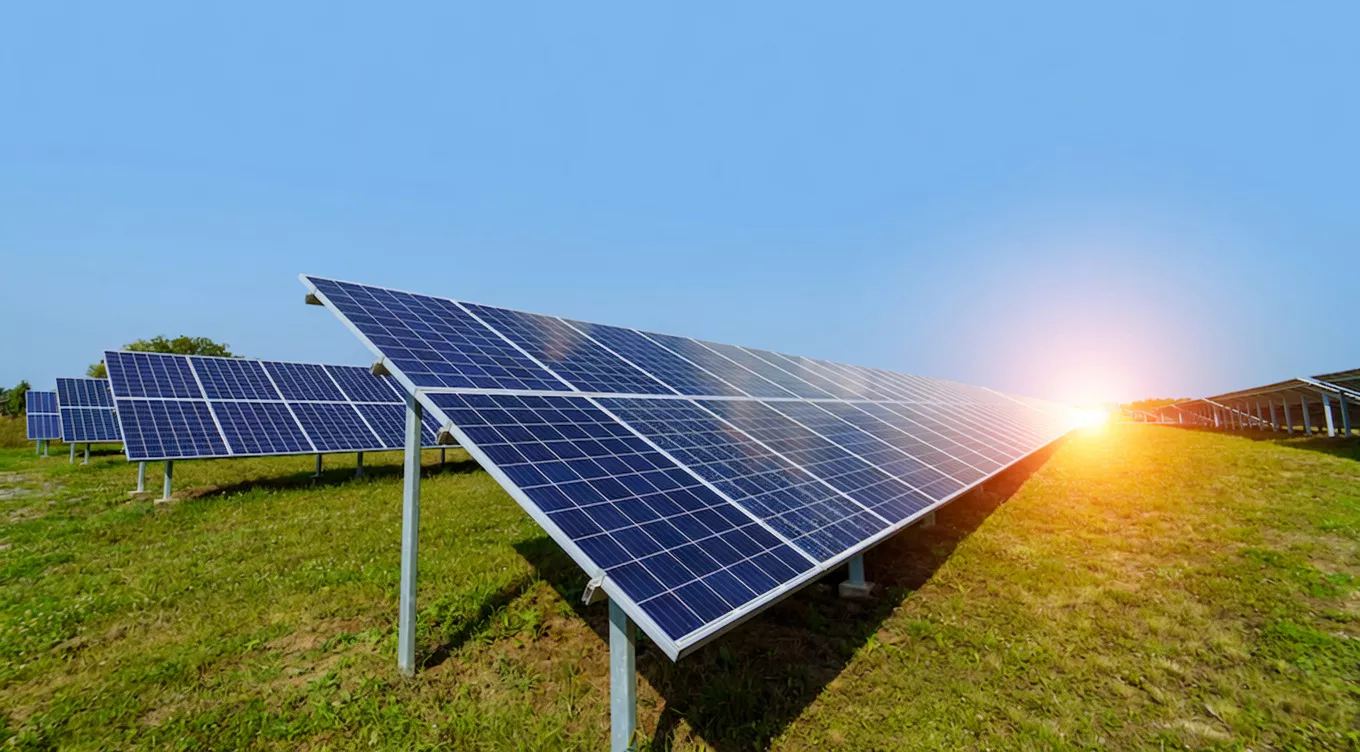
Single-axis and dual-axis solar tracker systems follow the sun across the sky, boosting photovoltaic yield by 20-45% over fixed-tilt installations. Each panel array acts as a sail in strong winds. The worm reducer selected for a solar tracker must move precisely when commanded and lock rigid when wind forces panels. Our worm gearboxes combine high-ratio reduction with the inherent self-locking geometry only a worm drive can reliably provide.
Why Self-Locking is the #1 Requirement for Solar Tracker Drives
In a utility-scale solar farm, tracker arrays must survive wind loads of 200-300 kg/m2 during storms. Without a self-locking drive, helical or planetary gears require an electromagnetic brake every time the motor stops. A worm gear with lead angle below 6 degrees is mechanically self-locking: wind torque on the output shaft cannot back-drive the worm shaft. Panels lock in place the instant the motor stops, with no brake, clutch, or control signal required.
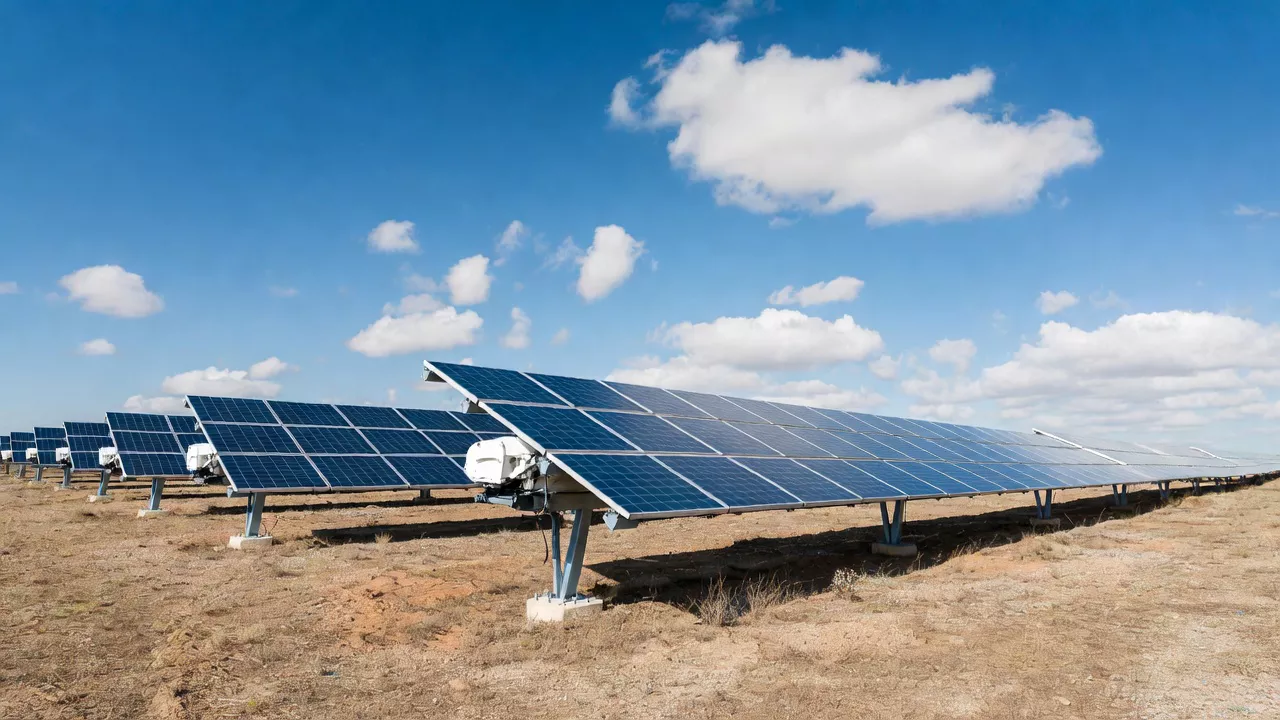
Rotates east-west on one horizontal axis. Requires ratio 40:1-100:1. One worm reducer per row of up to 40 panels.
Two independent worm drives for azimuth and elevation. Tracking accuracy of +-0.1 deg achievable with low-backlash worm units.
When high wind is detected, panels command to horizontal stow. Self-locking worm holds against structural wind load without any brake.
Worm Gearbox Construction for Outdoor Solar Applications
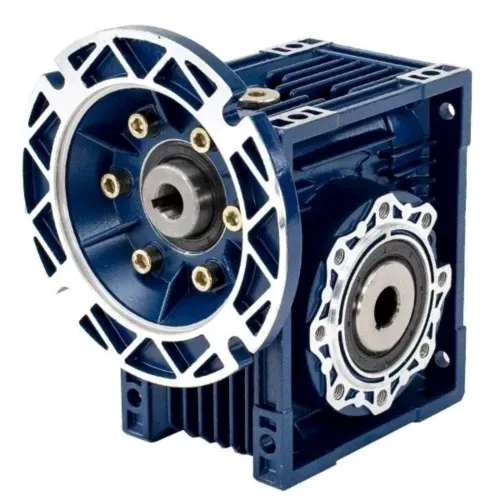
- Housing: Aluminum alloy (smaller units) or cast iron (larger). Aluminum offers corrosion resistance and reduced dead-load; cast iron for high-torque single-axis drives.
- Surface treatment: Chromate conversion + polyurethane topcoat on aluminum; two-pack epoxy on cast iron. UV-stable topcoat for 25-year field life.
- Worm shaft: 20CrMnTi case-hardened, ground to Ra 0.8 um, hard chrome on sealing diameter to resist pitting at lip seal contact zone.
- Worm wheel: ZCuSn10Pb1 centrifugal-cast tin bronze. Pore-free surface resists fretting corrosion during extremely slow, intermittent tracker movement.
- Sealing: IP65 minimum; IP66 recommended. Hydrophobic breather prevents moisture ingestion during day/night thermal cycling.
- Lubrication: Factory-filled PAO synthetic gear oil. Stable from -30 deg C to +60 deg C gearbox surface temperature without seasonal oil changes.
Technical Specifications & Selection Guide
| Parameter | Single-Axis | Dual-Axis Azimuth | Dual-Axis Elevation | Notes |
|---|---|---|---|---|
| Ratio Range | 40:1-100:1 | 60:1-100:1 | 40:1-80:1 | Chain/belt secondary optional |
| Output Torque | 800-5,000 Nm | 500-3,000 Nm | 300-1,500 Nm | With wind load SF=2.0 |
| Input Shaft | IEC B5/B14 or solid | IEC B14 compact | IEC B14 compact | NEMA frame on request |
| Output Shaft | Hollow bore 40-100mm | Solid 28-55mm | Solid 25-45mm | Double-ended available |
| Housing Material | Cast iron GGG40 | Aluminum alloy | Aluminum alloy | Epoxy coated |
| IP Rating | IP65/IP66 | IP65 | IP65 | Outdoor field installation |
| Backlash | <30 arc-min std | <15 arc-min | <10 arc-min | Low-backlash upgrade avail. |
| Ambient Temp. | -30C to +55C | -30C to +55C | -30C to +55C | PAO synthetic lubricant |
Service Factor & Wind Load Selection
- Tracking torque: Typically less than 5% of gearbox rated output torque. Select motor and gearbox for this load with SF=1.25.
- Wind holding torque: Calculated from panel area x wind pressure x moment arm. Apply SF=2.0 when verifying self-locking capacity.
- Stow-speed torque: During emergency stow, verify gearbox peak torque rating is not exceeded during a stow cycle with full wind loading.
- Temperature derating: In desert climates where gearbox surface may reach 60C in summer sun, verify lubricant viscosity is sufficient at this temperature.
Certifications & International Standards
Certified quality management throughout design, manufacture, and test – traceable records for every gearbox serial number.
EU Machinery Directive compliance – essential for European solar farm EPC contractors and project finance requirements.
IEC B5/B14 and NEMA 56C/145TC input flanges available, enabling compatibility with tracker motor suppliers globally.
Factory-tested dust-tight and water-jet resistant sealing – mandatory for all outdoor solar field installations.
Case Studies: Worm Gear Drives in Solar Tracker Projects
Challenge: Sandstorm wind speeds of 120 km/h and 80 m2 panel arrays required tracker drive to hold 12,000 Nm stall torque. Previous planetary drives slipped, damaging panel frames.
Result: Single-axis worm reducers ratio 80:1, self-locking verified at 18,000 Nm (3x rated). Zero panel damage over two full storm seasons.
Challenge: Agrivoltaic project required dual-axis tracking over irrigated crops from -5C winters to +45C summers without seasonal maintenance.
Result: PAO synthetic-filled aluminum worm reducers, IP65, low-backlash elevation axis. Annual energy yield 38% above fixed-tilt baseline.
Challenge: 95% RH coastal climate caused accelerated corrosion inside competitor drives using mineral oil and NBR seals within 14 months.
Result: IP66 aluminum worm reducers with hydrophobic breather and FKM seals. 36-month inspection showed zero internal corrosion.
Challenge: Winter temperatures reaching -38C caused mineral-oil-filled tracker drives to draw excessive motor current on morning start-up.
Result: Arctic-grade PAO synthetic (pour point -55C). Motor start current reduced by 60%; tracking efficiency improved 8% in winter months.
Challenge: Tracker units on water-surface pontoons required lightweight, corrosion-resistant gearboxes with strict weight budget per tracker unit.
Result: Aluminum NMRV worm reducers (40% lighter than cast iron), anodized housing, stainless fasteners. Weight target met with 12% margin; no corrosion after 18 months.
Why Solar Tracker OEMs Partner With Us
Solar-Specific Expertise
Tracker wind load calculations, stow-torque analysis, and field installation guides provided as standard technical support.
OEM Customization
Custom hollow bore diameters, encoder stub shafts, tracker-specific flange bolt patterns designed to your mechanical interface spec.
Volume Supply Capability
Our production lines support high-volume batch delivery with full traceability for utility-scale deployments.
Factory-Direct LCOE Impact
Factory-direct pricing without distributor markup reduces per-tracker drive cost, directly improving project Levelized Cost of Energy (LCOE).
Solar Tracker Worm Gearbox – FAQ
Power Your Solar Tracker Project with the Right Worm Drive
Share your tracker configuration, panel dimensions, wind zone, and mounting type. We will provide wind-load torque calculations, gearbox selection, and a volume quote for your project quantity.