Sealed Worm Gear Drive Solutions for Surface Aerators in Wastewater Treatment
Surface aerators and rotary aerator impellers are the workhorses of biological wastewater treatment — running continuously to transfer oxygen into activated sludge basins, oxidation ditches, and aeration lagoons. The gearbox driving the impeller must resist constant exposure to mist, condensation, and corrosive biogases while maintaining a consistent output speed. Our worm gear reducers with high-grade IP55/IP65 sealing deliver exactly this reliability, protecting internal components even when operating directly above a churning wastewater surface.
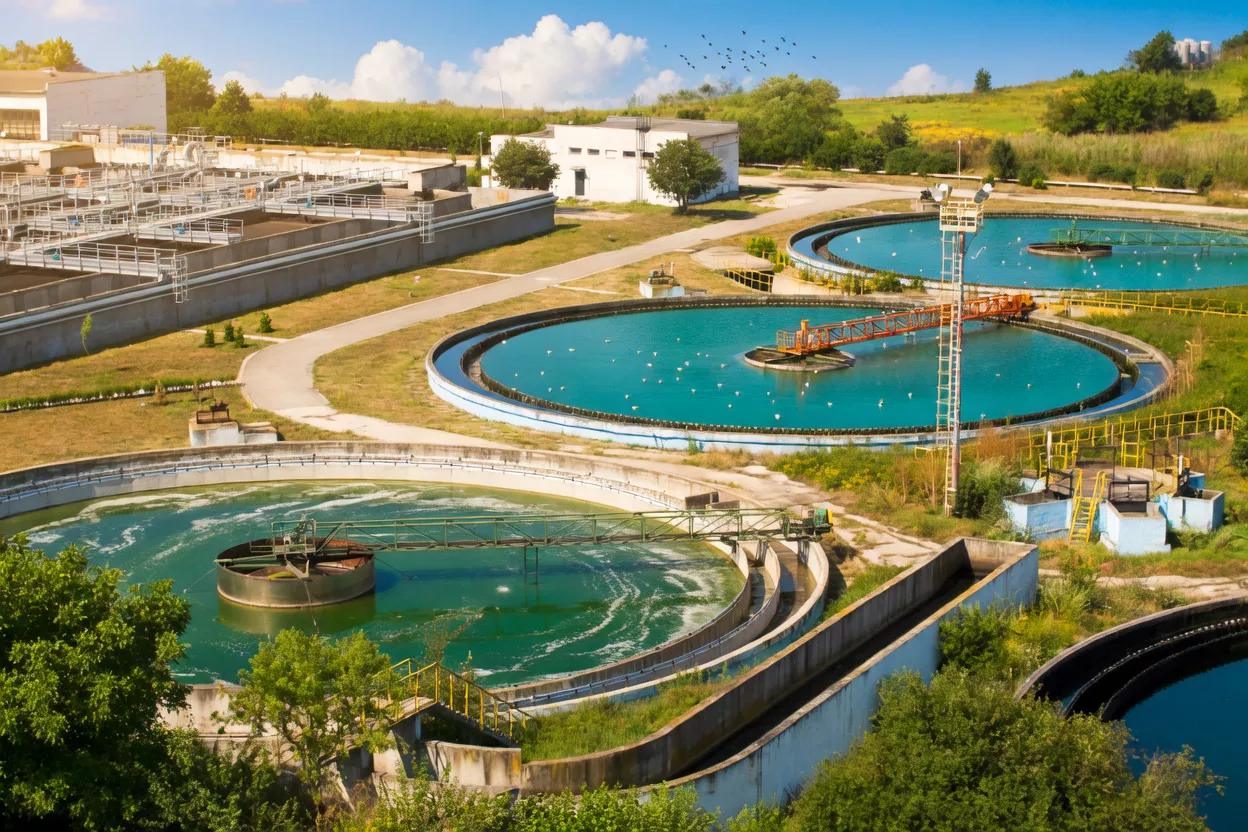
The Role of Worm Reducers in Surface Aeration Systems
A rotary surface aerator works by spinning a low-immersion impeller — often a float-mounted paddle wheel or high-speed spray cone — at a controlled speed, typically between 40 and 100 RPM. This violent agitation breaks the water surface, driving atmospheric oxygen dissolution rates of 1.2–2.5 kg O₂/kWh. The impeller shaft is usually oriented vertically, demanding a gearbox that can handle axial and radial thrust loads simultaneously.
Key reasons worm gear drives are selected for rotary aerators:
| Feature | Benefit in Aerator Application |
|---|---|
| Right-angle drive | Motor mounted horizontally on float; vertical output shaft drives impeller — ideal space-efficient layout |
| High axial load capacity | Worm output shaft bearings handle significant downward impeller weight and hydrodynamic thrust |
| IP55/IP65 sealing | Dual lip seals and O-ring flange gaskets block the constant water mist and corrosive gases from entering the oil bath |
| Noise-tolerant operation | Worm gear sliding contact is inherently quieter than helical at equivalent load, reducing noise near populated areas |
| Compact footprint | The float pontoon has limited structural space; worm gearbox achieves more reduction in a smaller envelope than parallel-shaft alternatives |
Construction & Material Details for Corrosion Resistance
Because the worm gearbox is mounted immediately above the aeration basin, every material choice matters for long-term reliability:
- Housing: Nodular cast iron (GGG40) provides superior strength-to-weight ratio and corrosion resistance versus standard grey iron. External surfaces are shot-blasted and coated with two-pack epoxy primer + polyurethane topcoat for chemical resistance.
- Worm shaft: Case-hardened 20CrMnTi alloy steel, ground to Ra 0.8 μm surface finish, nitrided for further corrosion resistance at shaft-seal contact area.
- Worm wheel: Centrifugal-cast tin bronze (ZCuSn10Pb1) — the centrifugal casting process creates a dense, homogeneous outer working surface free from porosity, giving 30–40% longer contact fatigue life than sand-cast alternatives.
- Output shaft sealing: Double lip seal with grease pocket between seals; optional triple seal for IP66 applications. The inner seal retains lubricant; the outer seal prevents contaminant ingress.
- Breather valve: Hydrophobic breather replaces the standard dip-stick breather to allow thermal expansion/contraction of oil without drawing in moist air.

Technical Specifications & Selection Guide
Swipe left/right to view complete table on mobile.
| Parameter | Small Aerator (<5kW) | Medium Aerator (5–22kW) | Large Aerator (>22kW) |
|---|---|---|---|
| Ratio Range | 15:1 – 40:1 | 20:1 – 60:1 | 30:1 – 80:1 |
| Output Speed | 36–96 RPM | 24–72 RPM | 18–48 RPM |
| Output Torque | 150–600 Nm | 600–2,500 Nm | 2,500–8,000 Nm |
| Input Shaft | IEC 80–100 flange | IEC 112–132 flange | IEC 160–200 flange |
| Output Shaft (Vertical) | Ø28–45 mm solid | Ø50–75 mm solid | Ø80–120 mm solid/flange |
| Housing Material | Aluminum alloy | Cast iron GGG40 | Cast iron GGG40 |
| IP Rating | IP55 standard | IP55/IP65 | IP65 standard |
| Mounting | Foot-mount, vertical output | Flange or foot-mount | Heavy-duty flange plate |
Service Factor & Thermal Rating Considerations
Rotary aerators operate continuously at relatively high output speeds (compared to sludge scrapers), so thermal rating is often the limiting factor rather than mechanical torque rating. When selecting a worm gear unit for aerator duty:
- Apply a service factor of 1.25–1.5 for impellers that may encounter floating debris or accumulation, which causes sudden torque spikes.
- Verify the thermal power rating (P₁th) of the gearbox at the actual ambient temperature. In tropical climates above 35°C, derate by 8–12%.
- For float-mounted aerators where natural ventilation of the gearbox housing is poor, consider selecting one frame size larger to increase heat dissipation surface area.
- Specify synthetic lubricant (PAO or polyglycol) for installations where output speed is below 50 RPM to ensure adequate oil film formation on the worm/wheel contact.
Compliance & Certifications
| Standard / Certification | Scope | Relevance to Aerators |
|---|---|---|
| ISO 9001:2015 | Quality Management System | Documented process control from casting to final inspection |
| CE Certification | EU Machinery Directive | Required for export to EU wastewater projects |
| IEC 60034 Flange Compatibility | Motor interface dimensions | Ensures compatibility with all IEC-frame aerator motors worldwide |
| IP55 / IP65 per IEC 60529 | Ingress Protection | Water jet and dust resistance for outdoor aerator basin installations |
| ISO 6743-6 Lubricant Grade | Gear lubricant specification | Factory-filled with water-treatment compatible, non-toxic synthetic gear oil |
Five Real-World Aerator Application Case Studies
Municipal STP — Bangladesh
Pain point: High humidity monsoon conditions caused competitor gearboxes to develop internal rust within 8 months.
Outcome: IP65 epoxy-coated worm gearboxes have operated 28 months without oil change or maintenance intervention.
Textile Effluent Plant — India
Pain point: Dye chemicals in mist caused rapid degradation of standard motor flange gaskets and lip seals.
Outcome: FKM (Viton) lip seals and EPDM flange O-rings specified; seal integrity confirmed after 12 months of exposure.
Aquaculture Pond — Southeast Asia
Pain point: Saltwater shrimp ponds required non-toxic lubricant certification — mineral oil contamination would kill stock.
Outcome: Food-grade H1 synthetic oil supplied from factory; triple output shaft seal eliminated any risk of contamination.
Petrochemical Wastewater — Middle East
Pain point: Hydrocarbon vapours in the air above the aeration basin attacked standard nitrile rubber seals.
Outcome: FKM seals and polyurethane external coating specified; 3-year inspection interval maintained by site engineering team.
Agricultural Biodigester — Europe
Pain point: Aerator gearbox needed to handle variable load when seasonal crop waste changed effluent viscosity dramatically.
Outcome: Oversized worm reducer with SF=1.8 and thermal override protection; zero thermal shutdowns recorded over two full agricultural seasons.
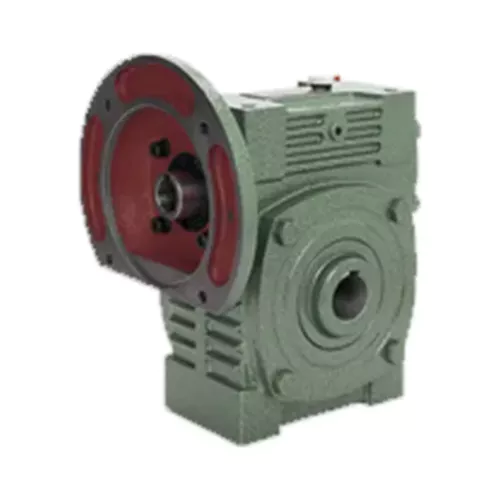
Why Choose Our Worm Gear Units for Aerator Applications?
We cast our own bronze worm wheels, machine worm shafts on CNC grinders, and assemble in a clean environment — every step controlled in-house for consistent quality.
We supply complete dimensional packages and 3D STEP models to aerator OEMs for integration into float frame designs, reducing their engineering time significantly.
Replacement parts — including worm wheels, shaft seals, bearings, and oil plugs — are stocked and ship internationally. Contact our team for parts availability.
Standard, FKM, PTFE, or food-grade sealing configurations are available at order stage — not as expensive retrofits.
Share your ambient temperature, duty cycle, and impeller load data — our engineers will confirm the thermal power rating margin before you commit to a purchase.
Frequently Asked Questions — Aerator Worm Gearboxes
Get Expert Support for Your Aerator Gearbox Selection
Tell us your impeller power, required output speed, mounting orientation, and basin environment. Our application engineers — with 20+ years in water treatment drives — will confirm the optimal worm reducer specification and provide full technical documentation.