Worm Gear Reducer for Strapping Machines — Maintenance-Free Right-Angle Drive for Industrial Banding Lines
Industrial strapping machines — also known as banding or bundling machines — apply polypropylene or steel strapping around packages, bundles, and pallets with split-second tensioning and sealing cycles that repeat hundreds of times per hour. Every cycle consists of a rapid strap-tension pulse followed by an instantaneous cutting action, creating a brief but intense torque spike in the drive mechanism. The worm gear reducer governing this mechanism must absorb these torque spikes without fatigue, require zero periodic lubrication adjustment, and maintain reliable operation in the dusty, high-cycle environment of a busy packaging line. Its 90° right-angle geometry — delivering drive motion around a corner without a bevel gear set — keeps the strapping head assembly compact enough to retrofit onto existing conveyor infrastructure. Our worm drive reducers are the industry-standard choice for strapping machine OEMs because of this unique combination of shock resistance, maintenance simplicity, and spatial efficiency.
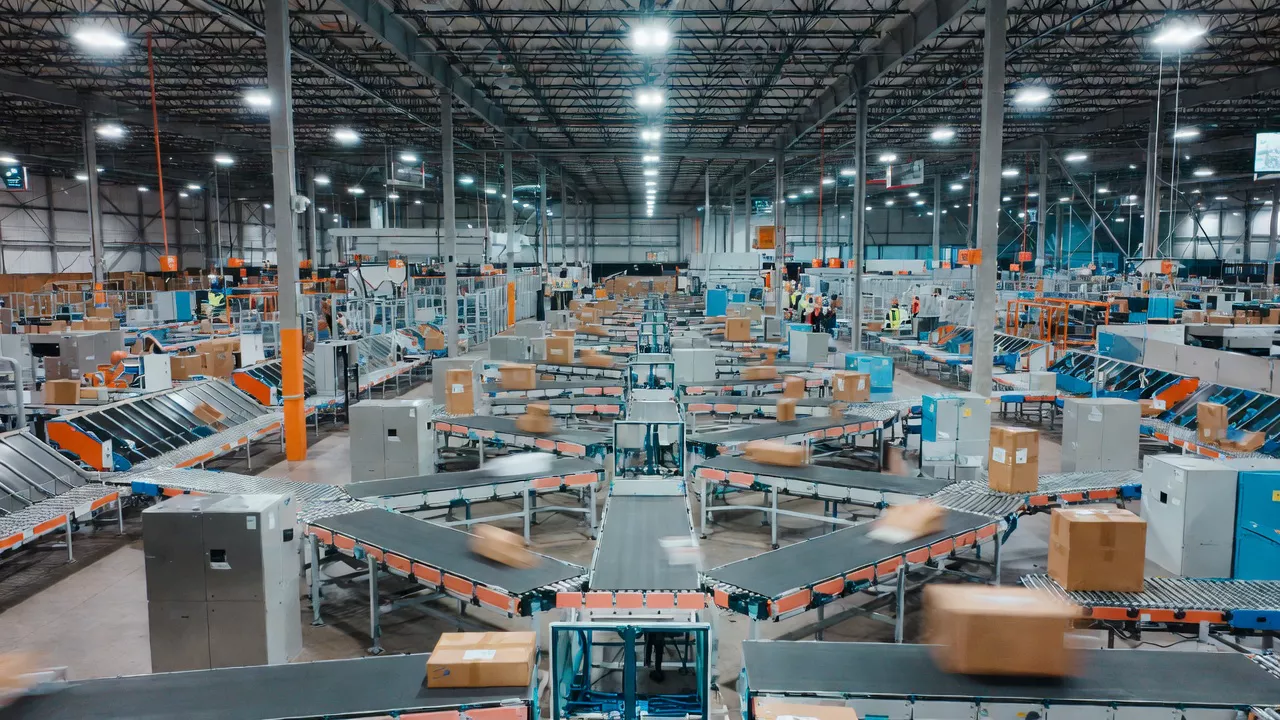
Strapping Machine Mechanics — How the Worm Drive Is Used
A fully automatic strapping machine completes each cycle in three mechanical phases, each placing different demands on the drive system:
| Cycle Phase | Mechanism Action | Worm Drive Role | Critical Parameter |
|---|---|---|---|
| Strap Feed | Feed wheel drives strap around the package at 1–3 m/s | Provides controlled low-torque rotation of feed roller | Speed consistency — prevents strap tangle |
| Tensioning | Tension wheel grips and pulls strap tight against package at 200–800 N tension | Transmits high instantaneous torque from tension motor | Peak torque capacity — SF 2.0 minimum |
| Sealing / Cutting | Hot-melt friction seal applied; cutter blade shears strap | Cam drive for sealing head; cutter mechanism | Impact-shock absorption; self-locking hold during seal |
The tensioning phase is the most demanding — when the tension wheel grips the strap and the motor stalls against the package resistance, the instantaneous torque in the drive train can reach 3–5× the rated continuous torque. This is exactly the shock-absorption scenario where the plastic deformation capacity of the ZCuSn10Pb1 phosphor bronze worm wheel provides a decisive advantage over sintered or cast alternatives. The bronze absorbs the micro-impact, recovers its shape, and the mesh continues without tooth fracture.
The 90° right-angle drive configuration places the motor on one axis and the tension/feed roller on a perpendicular axis — without a worm drive, this would require a bevel gear set (noisier, more expensive) or a belt-and-pulley arrangement (more maintenance). The worm reducer achieves this cleanly in a single, sealed, oil-bath unit that can run for years with only periodic oil level checks.
Technical Specifications — Strapping Machine Worm Reducers
| Parameter | Full Catalogue Range | Strapping Machine Spec | Reason |
|---|---|---|---|
| Gear Ratio | 5:1 – 100:1 | 10:1 – 30:1 | High cycle speed + adequate torque multiplication |
| Output Torque | 10 – 4 500 N·m | 15 – 120 N·m | SF 2.0 applied to tensioning torque spike |
| Service Factor | 1.0 – 2.5+ | SF 2.0 minimum | Tensioning shock loads — 3–5× continuous torque |
| Housing | Aluminium / Cast iron | Die-cast aluminium (NMRV) | Compact; fits strapping head frame |
| Geometry | Right-angle (90°) | 90° right-angle mandatory | Feed roller perpendicular to motor axis |
| Self-Locking | Ratio ≥ 30:1 | Required for sealing hold | Holds strap tension during sealing dwell |
| IP Rating | IP55 / IP65 | IP65 | Packaging dust and occasional liquid protection |
Maintenance Advantage — Why the Worm Drive Wins on Strapping Lines
Strapping machines on busy logistics and fulfilment lines run 18–24 hours per day, 7 days per week. The opportunity for planned maintenance is minimal — lines cannot be stopped for bearing re-grease, belt tension adjustment, or lubrication top-up during production windows. The worm reducer’s sealed oil-bath lubrication (with 2 000–5 000 hour oil change intervals), combined with its single-stage reduction with no additional chain or belt transmission, means the drive is functionally maintenance-free between annual service events. This dramatically reduces unplanned downtime on high-throughput strapping lines. For further engineering details, contact our technical support team.
Quality Standards & Compliance
Manufacturing QMS
Machinery Directive
Motor flanges
IEC 60529
Every unit
Five Strapping Machine Case Studies
Why Strapping Machine Builders Choose Our Worm Reducers
SF 2.0 standard for all strapping configurations; centrifugally cast bronze wheel absorbs tensioning pulse without tooth fatigue.
Single-stage worm drive eliminates the belt tensioners and chain lubricators that alternative drive arrangements require — simpler BOM, lower maintenance cost.
90° geometry routes motor and drive shaft in space-efficient L-configuration; critical for integrating strapping heads into standard conveyor profiles.
Factory-direct supply to strapping machine OEMs in 40+ countries; dedicated account managers, annual volume contracts, and consistent production scheduling.
Every unit ships with CE Declaration of Conformity, ISO 9001 factory certificate, dimensional drawing, and run-in test report — all the documentation strapping machine OEMs need to CE mark their complete machine without supplier paperwork delays.
Frequently Asked Questions
Why do strapping machine reducers fail prematurely, and how does the worm drive solve this?
The most common failure mode is worm wheel tooth fracture during the tensioning phase — when the motor stalls against maximum strap tension, the instantaneous torque spike exceeds the wheel’s yield strength. This is especially likely with: (a) under-sized reducers with SF <1.5; (b) sand-cast bronze wheels with porosity defects that act as stress concentrators; (c) incorrect oil viscosity causing inadequate mesh lubrication at the moment of peak load. Our centrifugally cast bronze wheels (denser, fewer defects), SF 2.0 sizing, and synthetic PAO lubrication address all three root causes simultaneously.
What ratio should I use for a strapping machine cycling at 60 straps per minute?
At 60 straps/min, each cycle takes 1 second. The feed phase typically occupies 0.3–0.5 seconds of the cycle, during which the feed roller must rotate fast enough to deploy the strap length around the package. For a 600 mm package circumference with a 40 mm diameter feed roller, the roller needs approximately 4.8 rev/stroke in 0.4 seconds = 720 rpm output speed. With a 4-pole motor at 1 450 rpm, ratio = 1 450 / 720 = 2.0 — unusually low. In practice, most strapping machines use ratio 5:1–15:1 and adjust feed speed via VFD or timing cam — provide your specific feed length and cycle time for an exact ratio recommendation from our engineering team.
Can the worm reducer handle both PP strap and steel strap machines?
Different strap types require different tension levels: PP strapping typically 300–600 N; PET strapping 600–1 200 N; steel strapping 1 000–3 000 N. The worm reducer must be sized for the peak tension force at the maximum strap type specified. A reducer correctly sized for steel strapping (SF 2.0 applied to 3 000 N steel tension) is obviously suitable for PP and PET as well — it just operates at a fraction of its capacity on lighter straps. Specify the maximum strap type when ordering, and we size accordingly.
What maintenance is actually required for a strapping machine worm gearbox?
Scheduled maintenance is minimal: (1) oil level check every 500 hours — top up if below the sight-glass mark; (2) first oil change at 500 hours to remove run-in particles; (3) subsequent oil changes every 2 500–4 000 hours depending on temperature and duty; (4) visual seal inspection annually — replace if oil weeping observed at shaft exits. No bearing re-grease, no belt tension adjustment, no chain lubrication — the sealed worm reducer is genuinely lower maintenance than any alternative drive for this application.
Can I integrate a worm reducer into a strapping machine with a pneumatic tensioning system?
Yes — many strapping machines use a pneumatic cylinder for the tensioning stroke and a worm-reducer-driven motor for the strap feed and sealing cam. In this hybrid architecture, the worm reducer handles the feed and cam drive while the pneumatic cylinder provides the variable tension force. The self-locking worm (ratio ≥ 30:1) on the cam drive holds the sealing head in position during the pneumatic tensioning dwell — a particularly elegant solution that eliminates the need for a separate cam-holding brake.
Reduce Strapping Line Downtime — Start with the Right Worm Drive
Tell us your strap type (PP/PET/steel), tension force, cycle rate, and operating hours per day — we provide a shock-rated worm reducer recommendation with full CE documentation within 24 hours.
Discover our factory, certifications, and OEM capabilities at the About Us page.