Silent Precision: Worm Gear Reducers for Stage Lifting Platforms
In the world of live performance — concert halls, opera houses, television studios, and touring theatrical productions — every mechanical component behind the stage must meet an extraordinarily demanding dual standard: absolute mechanical reliability and near-total silence. The worm gearbox is uniquely suited to this environment. Its sliding mesh contact between worm and wheel inherently dampens vibration, produces minimal noise, and delivers ultra-smooth motion that no chain drive, bevel gear, or helical reducer can match in a performance setting.
Stage lifting platforms — including orchestra pit elevators, performer lifts, scenic deck modules, and automated wagon systems — demand a worm gear reducer that combines silent operation with the critical ability to hold position without powered brakes. The inherent self-locking property of our high-ratio worm reducer ensures that every platform stays precisely where it is commanded, even during extended performance holds with full performer and scenery loads. Explore our range at the product library.
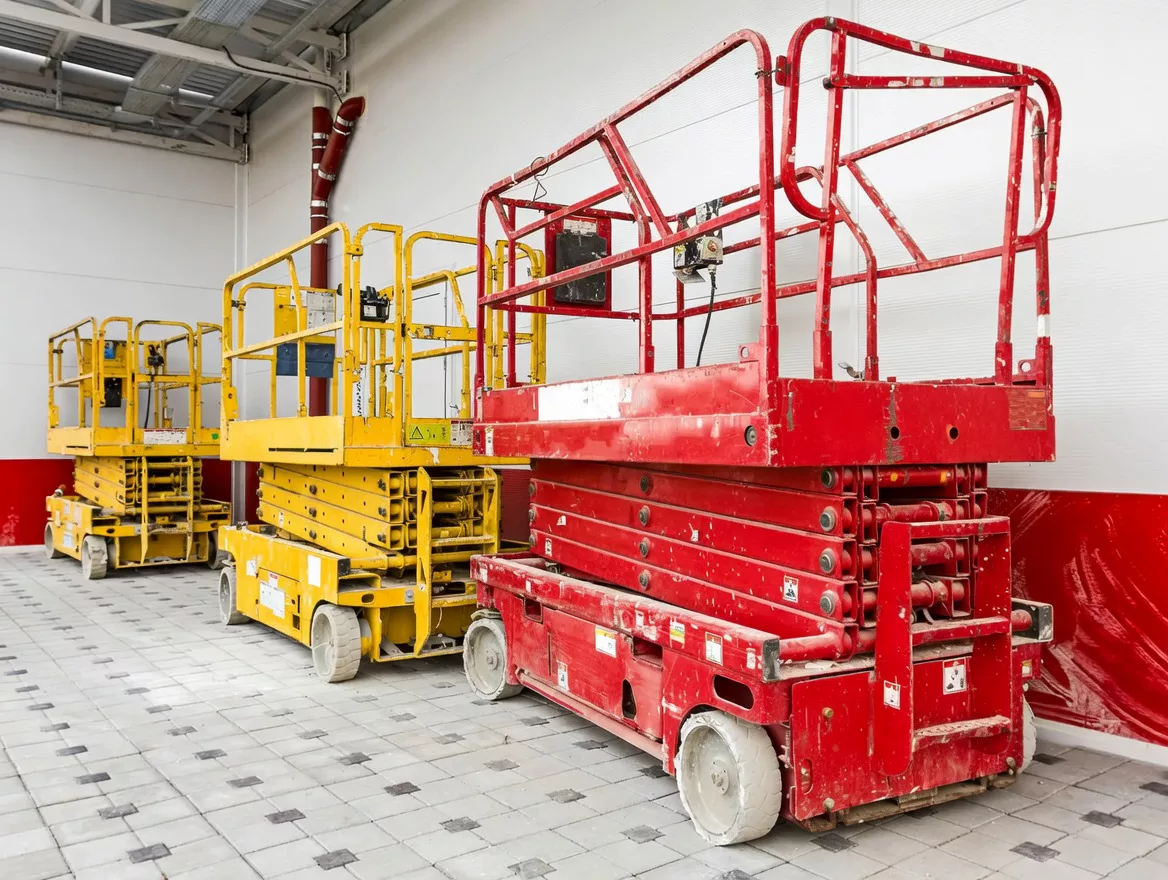
The Performing Arts Engineering Challenge
Stage machinery engineering is governed by a set of constraints that simply do not exist in industrial lifting applications. The following table compares the key requirements of a stage lift versus a standard industrial hoist:
| Requirement | Standard Industrial Hoist | Stage Lift Platform |
|---|---|---|
| Noise Level | Acceptable up to 80 dB | Must be inaudible to audience (<40 dB) |
| Position Holding | Powered brake acceptable | Passive mechanical lock — no brake noise |
| Speed Consistency | Variable acceptable | Pulsation-free, choreography-synchronized travel |
| Safety Redundancy | Single brake system | Multiple independent safety systems required |
| Vibration | Tolerated | Zero perceptible vibration on stage floor |
Why the Worm Gear Mechanism Excels in Stage Applications
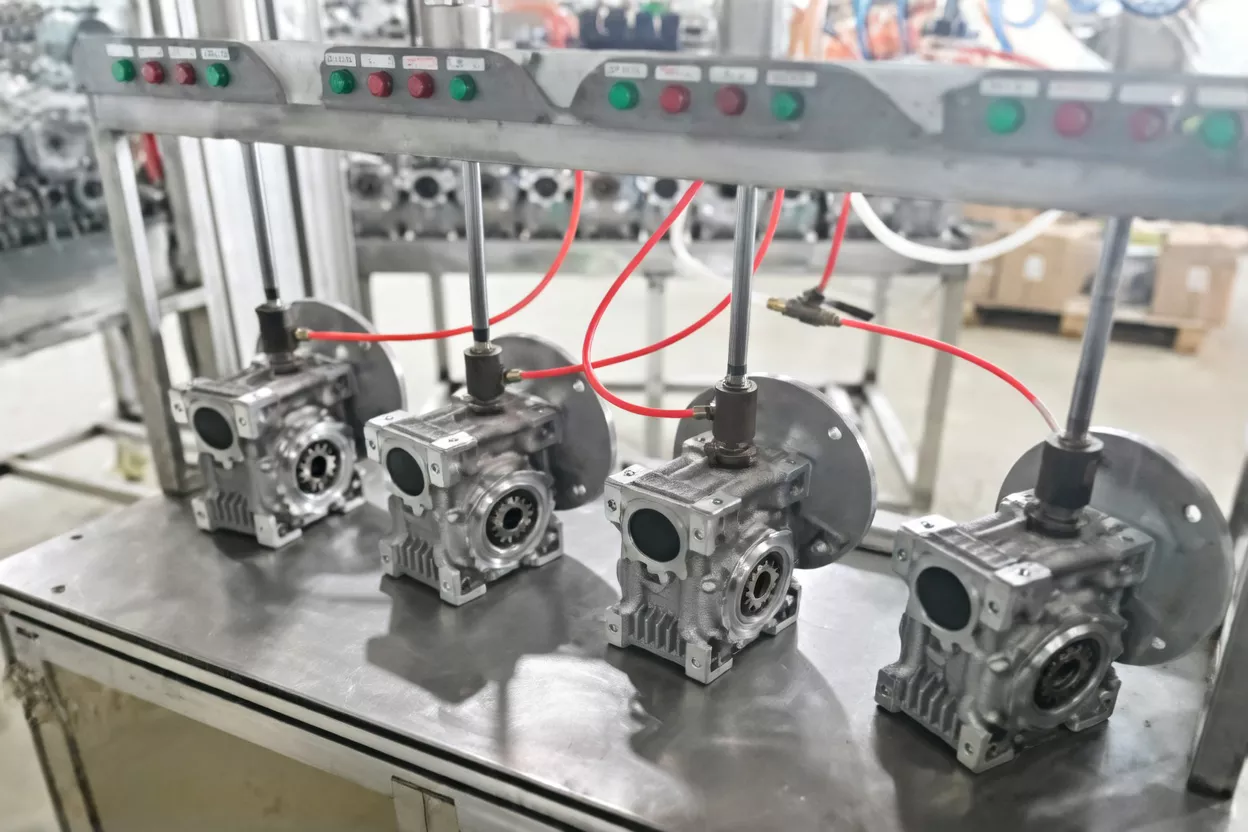
Technical Specifications — Stage Lift Worm Gearboxes
| Parameter | Specification | Stage Platform Notes |
|---|---|---|
| Gear Ratio | 10:1 – 100:1 | 40:1–80:1 for silent, self-locking operation |
| Output Torque | Up to 4,500 N·m | Size for full stage load + SF 2.5 safety margin |
| Input Shaft / Flange | Ø11–Ø55 mm / IEC B5/B14 | IEC-flanged servo or inverter-duty motors preferred |
| Output Shaft | Solid / Hollow bore | Hollow bore for screw or shaft coupling with minimal overhang |
| Housing Material | Aluminum alloy / Cast iron | Aluminum NMRV preferred — lighter, lower vibration transmission |
| Lubrication | ISO VG 220 synthetic (PAO) | Synthetic oil reduces friction noise further vs. mineral oil |
| IP Rating | IP54 / IP65 | IP54 standard for indoor theatre; IP65 for outdoor festival rigs |
| Noise Level | <55 dB at 1m (unloaded) | Specify low-noise grade with synthetic oil for critical use |
Certifications & Industry Standards
Certified quality system covering design, manufacture, and inspection of all worm reducer units
Full EU Machinery Directive 2006/42/EC compliance for stage and entertainment machinery integration
Universal B3/B5/B14 mounting compatibility with standard and servo motor frames
Ingress protection per IEC 60529 — suitable for indoor theatres and outdoor festival stages
Case Studies — Stage & Entertainment Lift Installations
Why Choose Us for Entertainment & Stage Lift Drives?
Matched-Set Supply
Multi-unit stage rigs require gearboxes from the same production batch for consistent efficiency and speed — we guarantee this on request.
Low-Noise Grade Available
Synthetic PAO oil-filled units with precision-ground worm shafts for minimum acoustic output — specified for recording and broadcast environments.
OEM / Custom Stage Builds
Non-standard shaft diameters, special flange patterns, and hollow-bore configurations for integration into proprietary stage machinery systems.
Global Touring Support
Replacement units available from stock for touring productions; emergency airfreight dispatched within 24 hours from our warehouse.
Learn more about our manufacturing and export capabilities on the about us page.
Frequently Asked Questions — Stage Platform Worm Gearboxes
How quiet is a worm gearbox compared to other drive types for stage lifts?
A worm gearbox running at low output speed (5–20 RPM) with synthetic PAO oil typically produces less than 50 dB at 1 metre under no-load conditions, and less than 58 dB under rated load. By comparison, helical gear units at the same output speed produce 62–70 dB due to tooth-mesh harmonics. Bevel gear boxes are similar to helical. For the quietest possible operation, specify our low-noise grade with precision-ground worm shaft and PAO synthetic oil when ordering.
Can a worm gearbox be synchronized with other stage lift units?
Yes. Multiple worm reducer units driven by individually controlled VFDs, with encoder feedback on each motor, can be synchronized to within ±2 mm across the full stroke using standard PLC motion control. For critical synchronization (4-corner lifts carrying performers), we recommend supplying matched gearboxes from the same production batch to ensure identical efficiency ratings across units, eliminating differential speed error from efficiency variation.
Is the self-locking feature reliable enough for a stage lift carrying performers?
The mechanical self-locking of a worm gearbox at ratios ≥40:1 is extremely reliable for static holding. However, for any lift carrying people, entertainment industry standards (including PLASA/ESTA and EN 17206 for stage machinery) require additional redundant safety devices regardless of the primary drive mechanism. Our worm reducers are designed to work alongside safety brakes, overspeed governors, and PLC-based safety monitoring systems — they are the primary hold device, not the only one.
Can I control the lift speed to match a specific musical tempo or cue timing?
Yes. When driven by a VFD, the worm gearbox output speed is directly proportional to the VFD output frequency. Speed can be ramped from 0 to maximum and back smoothly, with programmable S-curves to eliminate jerkiness at start and stop. Modern show-control systems can trigger VFD speed profiles from MIDI, DMX, or time-code cues — allowing the lift travel to be exactly timed to a bar of music or a lighting state change.
What maintenance does a stage platform worm gearbox need?
Stage lift worm gearboxes typically operate in intermittent duty (S3/S4 cycles) and accumulate relatively few operating hours per year compared to industrial uses. An annual inspection of shaft seals and oil level, plus an oil change every 3–5 years or 5,000 hours (whichever comes first), is typically sufficient for indoor stage installations using synthetic PAO oil. Always check fastener torque after the first 20 full load cycles following installation or reinstallation.
Do you offer backdrive protection testing or certification for stage lift gearboxes?
Yes. Each unit is run-in tested at our factory and self-locking is verified by applying a specified back-torque to the output shaft and confirming zero rotation. We can provide individual test records for self-locking verification on request. For installations requiring formal certification documentation, our technical team can advise on the appropriate test protocol and documentation package.
Bring Your Stage Vision to Life — Silently and Safely
Share your platform load, travel distance, and acoustic requirements — we’ll specify the ideal worm reducer for your stage machinery system.